Thoughts for Consideration

Already, But Not Yet!

“I was brought to the conviction that mine was only an intellectual belief – a belief in which there was no life. It looked for salvation in the future after death; and consequently my soul had not ‘Passed from death unto life.'” Pandita Ramabai (India, 1858-1922)

Last week I had the privilege of hearing Dr. D.A. Carson, a man I have known and respected for many years, speak on Ephesians 1. As I was reading through my personal devotions for later that week I found the above listed quote. As I read this my mind was drawn back to the message on Ephesians and one particular phrase used. Already, but not yet. While this phrase was not new to me, I was compelled to examine it more closely and in so doing examine my own belief.

“How so?” you may ask. Let me begin by reading Ephesians 1:3 – 14:

“Blessed be the God and Father of our Lord Jesus Christ, who has blessed us in Christ with every spiritual blessing in the heavenly places, even as He chose us in Him before the foundation of the world, that we should be holy and blameless before Him. In love He predestined us for adoption as sons through Jesus Christ, according to the purpose of His will, to the praise of His glorious grace, with which He has blessed us in the Beloved.

In Him we have redemption through his blood, the forgiveness of our trespasses, according to the riches of His grace, which He lavished upon us, in all wisdom and insight making known to us the mystery of His will, according to His purpose, which He set forth in Christ as a plan for the fullness of time, to unite all things in Him, things in heaven and things on earth. In Him we have obtained an inheritance, having been predestined according to the purpose of Him who works all things according to the counsel of His will, so that we who were the first to hope in Christ might be to the praise of His glory. In Him you also, when you heard the word of truth, the gospel of your salvation, and believed in Him, were sealed with the promised Holy Spirit, who is the guarantee of our inheritance until we acquire possession of it, to the praise of his glory.”

The Bible is very clear, every blessing I have, and I must stop to realize that I am truly blessed, comes from God. But I must realize that his greatest blessing is not found in material “blessings” but in a spiritual blessing. What is this blessing? This blessing is that despite my selfishness, despite my sin, despite my nature to turn away from God, He has chosen to reach out to me. He chose to send His Son, Jesus Christ, who carried the punishment I deserved for my rejection of a holy God, so that I would not have too. “In him we have redemption through his blood, the forgiveness of our trespasses, according to the riches of his grace, which he lavished upon us.” This is the greatest blessing of all, but what does it mean? We may stand before God legally and relationally justified if we have put our trust in the “riches of His grace, which He lavished upon us.” Simply put, by recognizing our sinfulness, accepting the forgiveness that Jesus Christ provided in our place and putting our trust in God, we are forgiven.

But not only forgiven, we are made part of God’s family. We had an “adoption as sons through Jesus Christ.” And this is not simply the adoption of a newborn child into a family, this is the adoption of one who has lived a life on their own being made part of a family with all the rights and privileges, and “In Him we have obtained an inheritance.” What is this inheritance? The truth is that it is many fold, it is the forgiveness of sins, it is the freedom to choose to follow Christ, it is being united with Christ, it is the right to stand in the presence of God, it is eternal life, it is being identified as part of God’s family. I could continue, but for the sake of this writing this will do. The point is that the blessings bestowed on us by God are but the beginning of our inheritance, and it is all “to the praise of His glory.”

So how does this bring me back to Already, but not yet. “In Him you also, when you heard the word of truth, the gospel of your salvation, and believed in Him, were sealed with the promised Holy Spirit, who is the guarantee of our inheritance until we acquire possession of it, to the praise of His glory.” To often I find myself, as many Christians do, looking forward to What God will do. We look for his coming again. We look forward to eternity with him. We look to be made holy. We look to find ourselves in the heavenly places.

And while we should look forward to these, we miss what God is doing in our lives and the world around us today. We miss that he has sent the Holy Spirit: John 16:7 “Nevertheless, I tell you the truth: it is to your advantage that I go away, for if I do not go away, the Helper will not come to you. But if I go I will send him to you.” We miss that we are already in his presence: Matthew 28:20 “And behold, I am with you always, to the end of the age.” We miss that we have already been made Holy (set apart): Hebrews 10:10 “And by that will, we have been made holy through the sacrifice of the body of Jesus Christ once for all.” We miss that we have already been placed in the heavenly places: Ephesians 2:6 “And God raised us up with Christ and seated us with Him in the heavenly realms in Christ Jesus.”

Yes it is true that we do not yet possess our full inheritance in Christ – we do not see him face to face, we are still surrounded by sin and death, we still face temptations, – we have, however, already obtained our inheritance in Christ, and it is guaranteed through the Holy Spirit. So I must ask myself, is this only intellectual and academic to me and I continue to live in the defeat of sin seeing only the “not yet”, or does this truth permeate my entire being and I live in the victory of Christ declaring “Already, but not yet.”

The Rest of the Story


Recently I had the opportunity to attend a Shabbat service at a local synagogue. A friend of my younger sons was going to be taking part in the service and his family had invited us.

It was a memorable experience as we sang with the Cantor, prayed with the Rabbi and worked our way through the service. While the Rabbi did not give a sermon, as this was a special service, we did get to see a faith steeped in rich tradition and history. I could not help but be moved by the reverence and truths relayed about God in the prayer book. (Fortunately there was an English translation as my Hebrew is a bit rusty.)

These are the chosen people of God described throughout the Bible. A people who have worship God in the same basic structure for more than 2000 years.

Just like me, they too worship the only God with praise, and joy. The words of the prayers speak of the gifts of God, the peace of God and that all is to the glory of God. Dare I say, they worshiped with a reverence to often missing in the Christian church.

To worship in this setting, it was clear that God spoke to my heart. But as my spirit was lifted toward God, I had one thing pound over and over. They are missing the rest of the story.

I remember listening to Paul Harvey tell “The Rest of the Story” on the radio. Paul and his team would take a significant person in history and then proceed to research around them to find out what had happened in their life that had helped make them the person we knew. Sometimes he would do the same things with significant events in history. It should be noted that in their research they had to have at least two independent sources confirming the story for it to make it on air.

When he told the story he did not begin by revealing who or what he was talking about, but rather he would tell the unknown story they had found in their research. Only after peaking your interest and fascination with the story would he reveal who or what he was talking about to the amusement, surprise and sometimes shock of the audience. He would then conclude with his trademark “and now you know, the rest of the story.”

In much the same way I felt like I was listening to a Paul Harvey story but before the person being spoken about was revealed, the radio was shut off. I wanted to stand up and shout, that “all of these prophecies, scriptures and laws point to the man known to the world as Jesus of Nazareth.”

That is the most exciting and liberating part of the story. No longer are we justified through the law, no longer do we need sacrifices for our sins, no longer must we enter into the presence of the Lord through rituals. For God has sent the promised messiah, the living tabernacle of God, Emmanuel – God with us. (Isaiah 7:14) He has sent the one who paid the price in full for our sins as prophesied in Isaiah 53:5 “by his wounds we are healed.” Through the Messiah we are forgiven and only through the Messiah may we enter into the presence of God. “I am the Way, the Truth and the Life, no one comes to the Father, but through me.” John 14:6 It is simply through faith in the Messiah that we receive salvation. “For it is by grace you have been saved, through faith – and this not from yourself, it is the gift of God – not by works, so no one can boast.” Ephesians 2:8-9. This means we are free to not depend on our obedience to the law for salvation but to obey God for the right reasons. For the greatest commandment is to “Love the Lord your God with all your heart and with all your soul and with all your mind … And the second is like it: love your neighbor as yourself. All the Law and the Prophets hang on these two commandments.” (Matthew 22:36-40 [Deuteronomy 6:5, Leviticus 19:18]) And while He has commanded it, we do not love simply because of the command, but “we love because he first loved us.” 1 John 4:19 In addition, we obey God that He might be glorified by our actions. “Let your light shine before men, that they may see your good deeds and praise your Father in heaven.” Matthew 5:16.

The good news is here. All the waiting, all the hoping and all the praying have come to fruition. The Law and the Prophets have been fulfilled. (Matthew 5:17) The messiah has come and his gift of salvation is available to all who believe. (Acts 10:43)

This is Jesus of Nazareth, “the Messiah, the Son of the living God.” (Matthew 16:16)

“And now you know, the rest of the story.”

Doctrine of the Holy Spirit


What are we referring to when we speak of The Holy Spirit. Is it a spirit that represents God? Is it the same thing as God? First, the question should better be stated, “Who is the Holy Spirit?” As I discussed in the two previous articles, God exist eternally in three person. The Holy Spirit is the third and final (and often over looked) part of the Godhead. The Holy Spirit, along with The Father and The Son make up the Trinity.

How do we know The Holy Spirit to be fully God. First, the Bible equates lying to The Holy Spirit and lying to God as the same thing (Acts 5:3-4). The clear implication is that the Holy Spirit is God. Further many of the attributes ascribed to God are also ascribed to the Holy Spirit.(eternal – Hebrews 9:14, omnipresent – Psalm 139:7-8) But why do we believe The Holy Spirit is a distinct person from the Father and the Son. Jesus clearly saw the Spirit as distinct. We see this when He commanded His disciple to baptize people in the name of the Father and of the Son and of the Holy Spirit (Matthew 28:19). We also see it in another passage where He states that when He leaves, the Holy Spirit will be sent from the Father (John 14:26, 15:26). The Holy Spirit is clearly God and clearly a distinct person, becoming a third person of the one true God.

So then, what is the role of the Holy Spirit? The Holy Spirit is sent of God to fill His people (Titus 3:5). When a person comes to accept the Lord as his personal Savior, he is baptized with the Holy Spirit (I Corinthians 12:13), washing away all sins. Now, the sin having been washed away, the new believer in Christ is filled with the Holy Spirit (I Corinthians 6:19). The Spirit then works to guide this new child of God (Romans 8:14) helping them to grow and develop in their relationship with Christ.

The Holy Spirit is the helper that Jesus promised His disciples(John 14:15-26) and is at work in the church today. The work of the Holy Spirit is to develop God’s church, those who believe. The Holy Spirit is at work in the development of Christian lives (John 14:26). He guides those who believe day by day in their lives (Acts 8:29, Romans 8:14).

The Holy Spirit intercedes for those of us who believe, through our prayers to the Father and communicates those things we can not even speak (Romans 8:26). The Holy Spirit also convicts the believers of sin in their lives. The Holy Spirit draws unbelievers to God and regenerates the heart of those who believe and call upon the name of Jesus Christ for forgiveness (2 Thessalonians 2:13).

What about Spiritual Gifts? Where do they fit in? To further build up the body, the Holy Spirit bestows (I Corinthians 12:11) His gifts upon the people of God for the working of the church (Ephesians 2:22, 4:11-12, Hebrews 2:3-4).Some of these gifts include prophecy, teaching, miracles, tongues, and evangalism among others (1 Corinthians 12:27-30, Ephesians 4:11-13) While God may still use any of the gifts today, they are not always present. Many of these gifts are still manifested in the church today. I do, however, believe that the miraculous gifts (tongues, healing, prophecy) are for special situations, such as the founding of the church, and not normative for today. This is not to say they do not exist but that the miraculous gifts, when expressed, must be in a context consistent with the Bible. They must be edifying and non-disruptive to the body (I Corinthians 12:12-31, 14:26-40, Ephesians 4:11-12).

The “charismatic” [or spirit] movement of the 20th century brought this issue to the forefront of the church. When speaking of the most noted of the miraculous gifts, peaking in tongues, Paul declares it is the least of the gifts and that not all believers possess the gift of tongues (I Corinthians 14:5). It therefore cannot be used as a litmus test in the life of a believer as some have done. Now, while they may not be normative in the church today, they should not automatically be dismissed, but should be examined on a case by case basis as to their legitimacy.

Setting aside the discussion of the “miraculous” gifts, we know that many gifts are given by the Spirit that are important to the working of the church. Each believer has their own special gifts that complement the gifts of other believers (I Peter 4:10). One gift is not greater than another, rather they all work together to build up the body of Christ. Through all, however, we must always seek the guidance of the Holy Spirit in the interpretation of God’s word and the application of the gifts bestowed by the Holy Spirit.

The Doctrine of Christ


Who is Jesus of Nazareth? This question as been pondered in the minds of many for two thousand years. For the answer to this question has impact on everyone from the lowliest beggar, to the mightiest King.

So who is Jesus of Nazareth and why, is he called Christ. Let me answer the second question first. Contrary to what many may think, based on it usage, Christ is not a last name, rather is a title. It is derived from the Greek word [christos], which means anointed or chosen one. It is the same as the Hebrew word Messiah. So when you hear Jesus referred to as the Christ or as the Messiah, these are the same thing. It is calling him the anointed one of God.

Now, back to the first question, who is Jesus? Jesus was a man, born into this world (Luke 2:5-7), who lived (Luke 2:52) and died (Mark 15:43-45). However the story does not simply end there. For Jesus what not simply a man, Jesus was also God incarnate [in flesh] (John 1:1, 14). He is the eternal God, the great I am of the Old Testament (Isaiah 9:6, Micah 5:2), who existed from the very beginning in co-existence with God [the Father] (John 1:1, 17:5). He is simultaneously fully man (Luke 19:10, Galatians 4:4) and fully God.He was the true God who took on the form of a man and faced all temptations that men face, to an infinite degree (Hebrews 4:15, Philippians 2:6-8). If Jesus had been simply God, but not man his sacrifice would have been inadequate, as he could not represent man. Had he been simply man, but not God his sacrifice would have been inadequate as he would have been imperfect. Jesus was fully God and fully man and there for was the only adequate sacrifice. (Hebrews 10:1-14)

Now while Jesus was fully man, he did not have a human father, rather the Holy Spirit came upon the virgin Mary and she gave birth to a son, Jesus Christ (Luke 1:35, Matthew 1:18-25) Though Jesus Christ was fully God, when He came to earth, He voluntarily surrendered the rights that came with His being God.He did not give up His being God, but willingly set aside His position as God to become man and face all temptations that man faced.In fact, Jesus did not only lower Himself to becoming a man, but came to serve man and die in his place.(Mark 10:45, Philippians 2:5-11).

Some have questioned the whole death of Jesus, but let me be clear, Jesus death on the cross was not simply passing out or “swooning” but was a true physical death. (Matthew 27:45-54, Mark 15:33-41, Luke 23:44-49, John 19:28-30).It was necessary that it be a true physical death as His death was a sacrifice that paid the penalty for the sins [anything not up to God’s perfect standard] of man (Matthew 20:28, I Timothy 2:6).As God is perfect and just, the sins of Man are an affront to His being. Therefore, the sins of Man needed a perfect offering to satisfy a just God.Jesus, being fully God and fully man was a perfect man. He therefore was the only adequate sacrifice to pay the price.His death on the cross fulfilled the prophecies of the messiah to come found in the Old Testament (Zechariah 2:10-11, Isaiah 52:13 – 53:12).It is through His death that our sins may be forgiven for His death was a sufficient sacrifice for the entire world, but it was only efficient for those who would believe (John 1:12, Romans 3:22).

After his death on the cross, Jesus was laid in a grave for three days and on the third day the Father raised Him from the dead in the perfection of the resurrected body (John 20:11-17, 26-29, I Corinthians 15:3-8).He was the first to be resurrected and through his resurrection, the door was opened to eternal life for those who believe (I Corinthians 20:20-21).

Jesus now sits at the “right hand” [the place of honor] of the Father (Acts 2:32-34), where He sits in authority over the church (Colossians 1:18) and serves as an advocate for believers (Hebrews 4:14-16).Jesus will one day return to claim those who have proclaimed belief in Him and have been forgiven (Acts 1:11, I Thessalonians 4:16-17) At the end of time He will sit in the judgment seat as all humanity stands before Him and He will separate those whose sins have been forgiven through belief in Him from those who are the unregenerate of the world (Matthew 25:31-46).

The Doctrine of God


I was unsure how to title this section, after all how does one describe God? Infinite, yet personal. powerful, yet gentle. God is God. He summed it up best Himself when he stated, “I am that I am.” For this reason I have chosen to simply entitle this “The Doctrine of God.”

So who is God? God is nonmaterial, personal and eternal, . (I will discuss the nature of the Son at a different time.) The question then is, “What does nonmaterial mean?“ The term nonmaterial does not mean that God is without substance. Rather, it points to the fact that God is Spirit (John 4:24). He is nonmaterial in the sense that we understand physicality.

God is personal. To say that God is personal is to say that God possesses two basic characteristics. First He possesses consciousness. He is aware of himself and his relationship with his creation, with us. Second, He possesses distinctiveness. He possesses a unique identity and characteristics.

Of these characteristics possessed by God, some are unique to Him alone. There are three basic attributes of God, which are unique to him. These attributes are:

  1. Immutability – God in His essence and nature is never changing (Malachi 3:6, Hebrews 13:8, James1:17). This is not to say that God is static, for He is capable of change and does so in His relationships (Genesis 6:6, Exodus 32:10, 14), but His very nature is unchanging.
  2. Infinity – God is limitless in His existence. He is beyond measure and therefore not capable of being confined. Included in his infinity are unconfinable (I Kings 8:27, Acts 17:24), all-powerful (Job 42:2), always present (Psalms 139:7-12, Jeremiah 23:24), and all-knowing (Psalms 147:4-5).
  3. Eternity – God is not confined to the essence of time. He is beyond time. His existence is outside time and is therefore in existence before, during, and after time. He has no beginning or end (Genesis 21:33, Psalm 90:2, I Timothy 1:17).

God also possesses certain attributes that are shared with his creation on a limited basis. These qualities include, but are not limited to:

  • Knowledge (John 2:25)
  • Power (Genesis 1:3, Matthew 19:26, Revelation 19:6)
  • Goodness (Mark 10:18)
  • Justice (Micah 6:8)
  • love (I John 4:7-10)

God is the creator of the heavens and the earth. He created them from nothing. (Romans 4:17, Genesis 1:1) Before anything existed, God existed. He was in the beginning. In the beginning, there was only God. (John 1:1) God created everything from nothing and brought life to it all. God is the origin (Colossians 1:16) and sustainer (Hebrews 1:3, Nehemiah 9:6) of all things. All things exist to bring Glory to Him (Isaiah 43:6-7).

God is the essence of being. I refer to God as a being, which is true in that he possess consciousness and distinctiveness. But God is more than “a” being, God is the essence of being. He is the source of all life (Acts 17:25, Colossians 1:16).

God himself exists eternally as a triune being. This is most commonly referred to as the Trinity. This is difficult concept for many and has led to some misunderstandings. While I do not claim to be able to explain it in any detail, I must be clear here, there is ONE God (Deuteronomy 6:4, Ephesians 4:6).

This one God exist eternally in three persons (John 10:30, 14:15-26, Acts 1:3-5): God the Father (John 6:40, Ephesians 4:6), God the Son (John 1:1, 6:40), and God the Holy Spirit (Acts 5:3-4). Each of these are clearly identified in these passages as God, not a god and not one of the gods, but as God. They are each equally and fully God. (John 10:30, Romans 8:9-14)

At the same time there is a economic subordination, that is to say there is a functional authority structure between them. Each plays a specific role. The Son prays to the Father, the Father sends the spirit (John 14:16). This has much more to do with the relationship between the three then God’s relationship with us. This is not to say it has nothing to do with God relationship to us, for we see demonstrated in God, the unity of purpose. The Son submits to the will of the Father (Luke 22:42). The desire of the Son was to do the will of the Father. They were united in their purpose and the son was subordinate to the Father in his action. We also see that God sends His spirit to those who believe in Him and the Spirit is subordinate in His actions. The Spirit is clearly united in the purpose. Yet, as should be clear from these same passages this economic subordination does have something to do with us. For the united purpose of each of these is God’s desire to have a relationship with us. It is through this unique relationship within God, that He reaches out for a relationship with us. Again, it is a difficult concept that I do not claim to be able to explain in full.

The Doctrine of Revelation


For many the term revelation brings up images of profound discoveries of hidden secrets. This is partially a result in Christian circles of an automatic connection to the last book of the Bible known as the “The Book of Revelation”. While such a description is indeed a revelation, not all revelation fits that description. The term revelation used in theological circles has a simple meaning. Revelation is the act of God making himself, truths and information otherwise unavailable known. When the fact that the very nature of God can not be contained is combined with His desire to have a relationship with human kind, it must be made known. (John 3:16, II Peter 1:4) Revelation must occur. Now having defined revelation we will see that it can be subdivided into two categories.

1) General Revelation –
The first category is General (or Natural) revelation. General revelation is simply the act of God revealing himself by means of His creation. God reveals himself through nature. (Psalm 19:1-6, Romans 1:19-23) When we see the vastness of the night sky or the majesty of the mountains, when hear the power of the rolling thunder or the roaring rapids, when we feel the gentle breeze or the warmth of the sun we experience God. He and his character are revealed to us.

In addition, God reveals himself through people’s own consciousness (Romans 2:14-15). The fact that we are self aware, that we can learn and grow, that we have a concept of right and wrong is a testimony to God.

2) Special Revelation –
The second category is Special revelation. Where general revelation was God revealed through natural means, special revelation is the act of God revealing himself through means that are not “natural” or are “special.” These are divine action in history and include, though are not necessarily limited to, Miracles (Exodus 4:3-5, I Kings 18:30-39), Spoken Word (I Samuel 3, Acts 9:4), Visions (Isaiah 6), Angelic Visits (Luke 1:11-20), Dreams (Matthew 1:20), Incarnation of Christ (John 1:1, 14, 18) and Scripture (II Timothy 3:16).

Holy Scriptures –
The Bible is the most available form of special revelation. All 66 books of the Bible are the inspired word of God. What does this mean? Inspired literally means God-breathed (II Timothy 3:16). It refers to the way in which God has communicated his message through those who wrote the scriptures.

So what does it actually mean to be inspired or God Breathed. First, it is not dictation. That is to say that God did not simply say the words and the authors wrote them down word for word. Second, it does not mean that God simply gave the authors a nebulous concept to share as best they could. Rather, inspired means that God spoke the very words (Galatians 3:16) through the writers in their unique personalities and styles of writing (II Peter 1:21). That is to say, the scriptures are the very words of God, and at the same time they are the very words of the authors. As a result of this unique characteristic, the Bible may be understood through study and the illuminating guidance of the Holy Spirit (I Corinthians 2:12 – 13).

Further, as they are the very words of God, the scriptures are inerrant (John 10:34-35) in their original writings. The very fact that they were inspired (breathed) by God makes it impossible for them to contain errors. Having said this, it must be understood that this claim can only be made of the original writings as penned by the authors. (Thought through much study and research the current Bible is trustworthy.) That is to say the very words put on paper by the authors’ hand were the inerrant words of God.

Finally, the scriptures are the proven authority for life (Isaiah 55:11). The Bible itself testifies to this fact as did Jesus Christ. (II Samuel 22:31, John 17:7-8)

God has revealed himself. Though many of us may not experience miracles God speaking directly to us, visions, Angelic Visits and Dreams we can see Him through His Creation and we can know Him though His inspired word.

Trusting in God’s Will – An Act of Faith


I recently received a note of encouragement and sound advice from a friend. My friend served in ministry for 1 ½ years before the position came to an end. He began searching for a new position but eventually realized that nothing was forthcoming and so needed to find a job to support his family. He has since done so. I am glad to hear that he has a means to support his family and pray that God will continue to bless him in all that he does. In his message he said, “May I suggest you get a non-ministry job, anywhere, pronto just to feed your family while you are looking.” This is, of course, sound practical advice, and I am not one to ignore the practical. But I have been contemplating God’s call and my response. Most notably, how do faith based and practical decisions interact and/or conflict with one another.

I realize I have responsibilities to care for and provide for my family. This is, of course my first and greatest responsibility. What is further, I do not believe that God would ask me to follow him to the detriment of my family. Having said this, I also realize that my vision is limited by my experience and by what I see around me. What I mean by this is that what to me, may initially seem to be detrimental to my family, in the long run may, in fact, be the greater good and glorifying to God. For example, in the short run, God asking Abraham to sacrifice Isaac was clearly detrimental to his family. But Abraham saw past this, for he knew God’s promise to him and in the long run, God’s request and Abraham’s faith proved to be glorifying to God.

But let’s be honest, the first thing through my mind is “I am not Abraham and Abraham was a special case.” Is it not self-serving for me to try to justify an impractical decision by claiming that God will use it to his glory? Here in lies the dilemma. When does making practical decisions equal a lack of faith and when does a leap of faith become a foolish venture?

I cannot speak for every person and every situation, but I can share my thoughts. God gave me a brain and expects me to use it. At the same time, God sometimes ask people to do things that seem foolish.

So how do we know which one to follow? How do we discern God’s will? Discerning God’s will has been a problem for all people from the very beginning. (Okay, not from the beginning, it was pretty clear for Adam and Eve, but even when they clearly knew it, they had trouble following it.)

For me, it has not been easy, as those whose advice I have sought will testify too. But that is one of the keys I have found in discerning God’s will. It is to seek the insight of those around you, those who can look at things objectively and those will be completely honest with you. It is from these people I have felt confirmation and support of my calling and the direction in my life.

Another important aspect of discerning God’s will is prayer. Prayer has been my opportunity to seek God’s guidance, to ask for His blessing on my life. It is, however, important to remember that prayer is not a onetime thing, but it is on going. I have prayed daily over this with the only result being a growing commitment to the call.

Another important part has been to take time away from distraction and other activities. This is a time when I can hear God’s voice, when I can cry out to Him and I can sit in silence before Him. I can describe the times of joy and the tear filled moments that have helped me to grow.

The answers are seldom 100% clear. Sometimes the act of faith may well be the practical route, but other times the act of faith may be what seems impractical to the world. In either case, the dependence must be placed on God and not in our own abilities.

I cannot say, what the answers are for others. Each of us must seek God’s will for our own lives. each of us must learn to listen as much with our heart as we do with our mind. In my case, I can say with confidence that I have placed my trust in God and I am seeking his guidance. I do not question any decision I have made to date in this matter and will continue to seek his guidance in seeking His direction.

I thank my friend for His advice and will take it under consideration, but either way, I will seek God’s guidance.

“Then the LORD said: “I am making a covenant with you. Before all your people I will do wonders never before done in any nation in all the world. The people you live among will see how awesome is the work that I, the LORD, will do for you.”
Exodus 34:10

Thank You For Your Service!

The words often seem empty and hollow to me. I don’t want them to be. We have all seen it and many of us have done it. You see someone in a military uniform, you walk up to them and say, “I just wanted to say thank you for your service.” . . . Thank you. . . It can so easily slip out it almost becomes simple reflex. But can these two little words truly communicate the level of gratitude I feel toward those to whom I owe so great a debt.

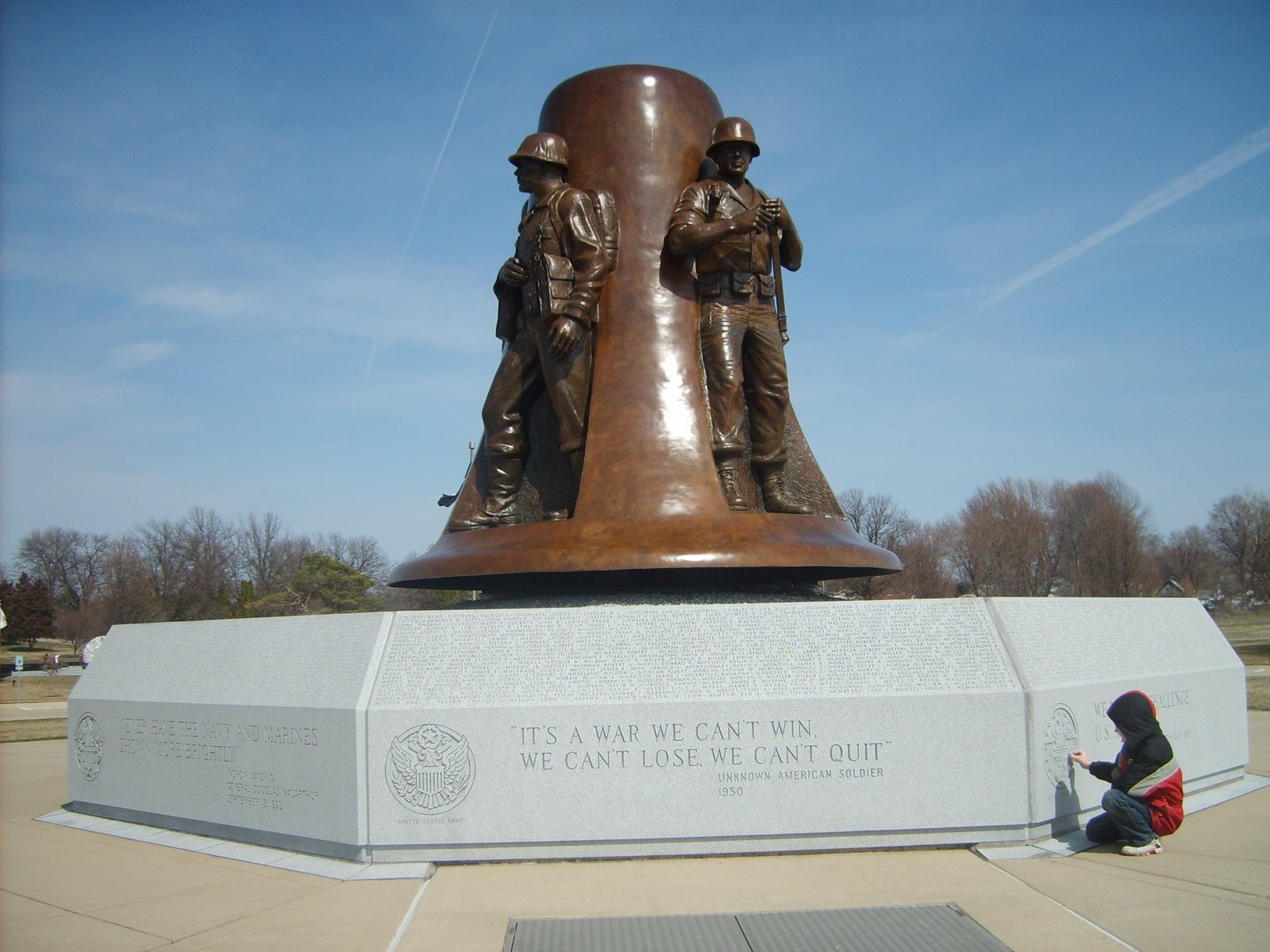
Last year my family took a spring vacation to Springfield, Illinois. We saw the Lincoln Museum and the capitol building. We even ate at the Cozy Dog. We ended the time in Springfield by visiting Lincoln’s tomb. We finished the tour and were ready to go when I took a small detour in the cemetery. We went to the Veterans Memorials.


We walked around these monuments and I explained to my children what they meant. That these were here to remind us of what had happened and to ensure that we never forget. As I read and talked to them about the many men and women who had given their lives in service, I wondered if they could truly understand. I am sure the answer is no. I am pretty sure I don’t understand.

I should also mention that we had the privilege to visit the Illinois Fire Fighters Memorial and Police Memorial while visiting the capitol building.  A reminder as well of the sacrifices made by these men and women in uniform.


Tonight, as we were watching the National Memorial Day Concert my seven year old daughter asked, “Why did the people have to die?” How do you answer that. I explained that there are evil people in the world. And because of the evil, it is necessary for good people to stand up and fight back against the evil. I told her that sometime when fighting against evil, good people die. They give up their lives to do what is right. This seemed to answer the question for her, but I was left asking myself, “Why did the people have to die?” The answer worked for a seven year old, why not for me.

Tomorrow I will take my children to the Memorial Day ceremonies in town both at the city park and the cemetery. I know for them it often seems long and boring. But can I do any less. Not only to remember and honor those who have given so much, but to demonstrate for and teach my children the importance of doing so.

Perhaps, Thank You isn’t so hollow. Perhaps it is simply the best that can be said when words are not enough.

So to those who have served, to those who were injured, to those who gave their life. To all these and their families, I simply say . . .

THANK YOU.

It All Boils Down to Relationships


I have said for years that everything we do boils down to relationships. Success in business, success in ministry, success in family and success in life in general all come down to successful relationships.

As many of you know, I was recently laid off from a job I had for 20 years. A job, if I might say, I was quite successful at not because of my great knowledge or abilities, but because of my relationships. In my job I had direct supervision and responsibility for a team that was entrusted with the safety of a university campus. Now many of us have images of people in security, safety, law enforcement, etc. People who are tied to the rules. People who are rigid and unwilling to bend. Trust me, I have known and worked with some of them, but as a person who served in this capacity for so many years I assure you that this will only get you so far. In his blog “Relationships – The Key to Successful Leadership” Doug Dickerson refers to Alan Loy McGinnis’ book “Brining out the Best in People.”

“In the simplest terms, the people who like people and who believe that those they lead have the best intentions will get the best from them. On the other hand, the police-type leader, who is constantly on the watch for everyone’s worst side, will find that people get defensive and self-protective and that the doors to their inner possibilities quickly close.”

Policies and rules have a place, and without them productivity of any sort will fall apart. They may at times serve as the starting point so that people know what is expected. And on those unfortunate occasions when necessary to call people to account they may serve as an ending point. But we do not live and work at the beginning or the end. We work and live in the in-between. It is here that relationships develop and grow.

It is through relationships that people get to know each other personally. It is through relationships that people become vulnerable to each other and learn that they can trust each other. It is through relationships that we develop a vested interest in each other’s welfare. It is through relationships that people become committed to each other.

Taken to its ultimate level I am reminded of the quote, “IF THEY FEAR YOU, THEY WILL ONLY FIGHT FOR YOU, BUT IF THEY LOVE YOU, THEY WILL DIE FOR YOU!” (I am having trouble placing the quote.) Do those who work for us love us? Do those we work with love us? Do those we work for love us? More importantly, do we love them?

We were never meant to live and work alone, isolated from others. God intended from the very beginning that we live in relationships.

“Then the LORD said, ‘It is not good for the man to be alone, I will make him a helper suitable to him.'” Genesis 2:18

Jesus himself did not lead by giving orders and rules, but by living in relationships. Those he chose to minister with him were not servants, but friends.

“. . . I have called you friends, for everything I have learned from my Father I have made known to you.” John 15:15

We will not always be perfect. We will not always live up to the standards that have been set. It is only when we have a relationship that we will be able to forgive these lapses.

“Above all, love each other deeply, because love covers over a multitude of sins.” 1 Peter 4:8

It all boils down to relationships. This is where we define success. Worldly success can be found apart from relationships, but it is meaningless. But relationships allow us to be successful even if we are a failure in the world’s eyes. I am reminded of the quote found at the end of the movie “It’s A Wonderful Life.” “No Man is a Failure who has friends.”

We need to reach out to others, share with others and love others to truly know success. Success in business, ministry, family and life is found in our relationships.

Laughter is the Best Medicine?


So I am home from Church today sick. Very frustrating in and of itself. So what do I do? I turn on the TV and flip through the channels to learn, there is nothing on Sunday Morning. So I end up landing on Lakewood Church with Joel Osteen. I know what many of your are thinking already, that apparently my illness has made me delusional. But it was like watching a car crash. I just could not turn away.

So he was talking about laughter, yes an entire half hour Sunday morning message on laughter. So I said, I need to see where he is going with this. First he began talking about how laughter is the key to health. If we laughed we would find that we could sleep better, we would find that we would have less pain and we would find that we would get sick less. (Apparently I have not been laughing enough. You all know me, I am so terminally miserable; ). )

He goes on from here to say that if we find ourselves laughing more, that we would build our relationships. According to him laughing is one of the two foundations of a strong marriage, coupled with respect. (Unfortunately on occasion the two seem to stand in stark contrast. There are things I would love to laugh at that I am sure my wife would not find amusing.)

I watched for about 20 minutes. Now it is possible that he mentioned it while I was not watching, but not once did I hear him refer to the Bible. What did he refer to? He refer to studies to support his point. He further referred to the fact that we needed to have joy in our lives and if we are denying ourselves laughter, we are missing the joy God intended us to have in our lives.

So here I find my dilemma. I do not argue that laughter is important and simply put, enjoyable. A person who never expresses joy or happiness is heading down a dark road leading to misery and worse. But it is his apparent, proposition that by not laughing we are missing the joy. Perhaps I read to much into it, but what I was hearing was that that joy was dependent upon our laughter. He told his congregation to daily find two or three things to really laugh heartily at, as if we could bring this joy into our own lives.

How many people saw this and missed the true source of joy. Probably most, as he never said. The Bible is clear, “the fruit of the Spirit is love, joy, peace, patience, kindness, goodness, faithfulness, gentleness, self-control; against such things there is no law.” Galations 5:22 – 23. The fruit of the spirit. It is from God alone that we find our true joy. It is not simply laughter. If this was the case, then we can close the churches and simply open more comedy clubs. Through this, the world will know joy. But laughter is not the answer. The angel declared “I bring you good news of great joy which will be for all the people” in Luke 2:10. And what was the source of that joy “today in the city of David there has been born for you a Savior, who is Christ the Lord.” In addition Nehemiah 8:10 declares, “Do not grieve, for the joy of the LORD is your strength.”

The source of our joy is not laughter. The source of our joy is not from within. The source of our joy is God the Father, God the Son and God the Holy Spirit. Laughter should simply be a expression of a joy God has placed in us, and not the source of joy.

Does that mean that laughter is not to be sought after? Certainly not. I enjoy to laugh. I have watched the “infomercial” on the Worship Network for Tim Hawkins “Full Range Of Motion” video numerous times, and I find it just as funny each time. (Yes I realize that this is supposed to get me to by the video, but I’m cheap.) Some have even said that I have a very funny streak, though it may be a bit dry for some to catch.

Further, there are clear studies that do seem to point to the “healing power of laughter.” But are we using the laughter as a band-aid for what is really wrong or is it is a sign of the healing that God is working within us? Is it a sign of God’s joy.

What we do need to do is watch for dangers. First, what are we laughing at. There are things that will make us laugh that shouldn’t. The Bible clearly warns us that “there must be no filthiness and silly talk, or coarse jesting, which are not fitting.” Ephesians 5:4. Yes I know some people who greatly pull this verse out of context and always keep a somber mood saying things like, “we should never have fun with anything dealing with God.” (This includes songs like “I am a C, I am a C-H. Watch out for those children’s Sunday School teachers corrupting the future generations.) This surely is not what Paul is saying. Rather we must not miss the final phrase “which are not fitting.” There are some context where any jesting would be inappropriate and there is some jesting which is never appropriate, but this is not a prohibition to expressing the joy that God has placed in us through laughter.

Second, there was a movement within the charismatic movement in the past, and still active in some places called “Holy Laughter.” The position is that God will simply strike people with such joy that they simply can not control the laughter and must burst out and role, even rolling on the floor. While I do argue that the joy we experience come from God and that laughter can be an expression of this joy, there is no biblical support for the idea of an entire movement of God, simply resulting in people laughing. Paul is very clear in 1 Corinthians 14 when he presents that while expressions of the spirit are valid within worship, there must be orderliness to it and it must be edifying to the body.

I am not going to pass judgement on Joel Osteen of Lakewood Church. I have read their doctrinal statement and it seems sound. And as I do not personnally know Mr. Osteen it would be inappropriate. But I do challenge his words. While laughter is important, it is joy that is crucial and this joy can only be found in a personal relationship with Jesus Christ. It is this joy we share with other who know Jesus “If you have any encouragement from being united with Christ, if any comfort from his love, if any fellowship with the Spirit, if any tenderness and compassion, then make my joy complete by being like-minded, having the same love, being one in spirit and purpose.” Philippians 2:1-2 and that we share with the world “Go therefore and make disciples of all the nations, baptizing them in the name of the Father and the Son and the Holy Spirit, teaching them to observe all that I commanded you; and lo, I am with you always, even to the end of the age.” Matthew 28:19 – 20.

Laughter is the best medicine? No, it is not. Laughter is medicinal, but it is the joy and hope that can only be found in Jesus Christ that is the best medicine.